


web application development uk: A Gamer’s Guide to Building the Next‑Gen Playgrounds

When I first tried to set up a private leaderboard for my clan’s weekly Rainbow Six Siege scrims, I quickly learned that a slick web portal beats a spreadsheet any day. That revelation pushed me into the world of web application development uk, where the blend of cutting‑edge code and British tech culture feels like the perfect co‑op mode for any developer‑gamer. In my experience, the UK’s mix of seasoned agencies, university talent pipelines, and a love for esports makes it a hotbed for building the kind of interactive experiences we gamers crave.
Table of Contents
- Why web application development uk Matters to Gamers
- Choosing the Right Tech Stack in the British Isles
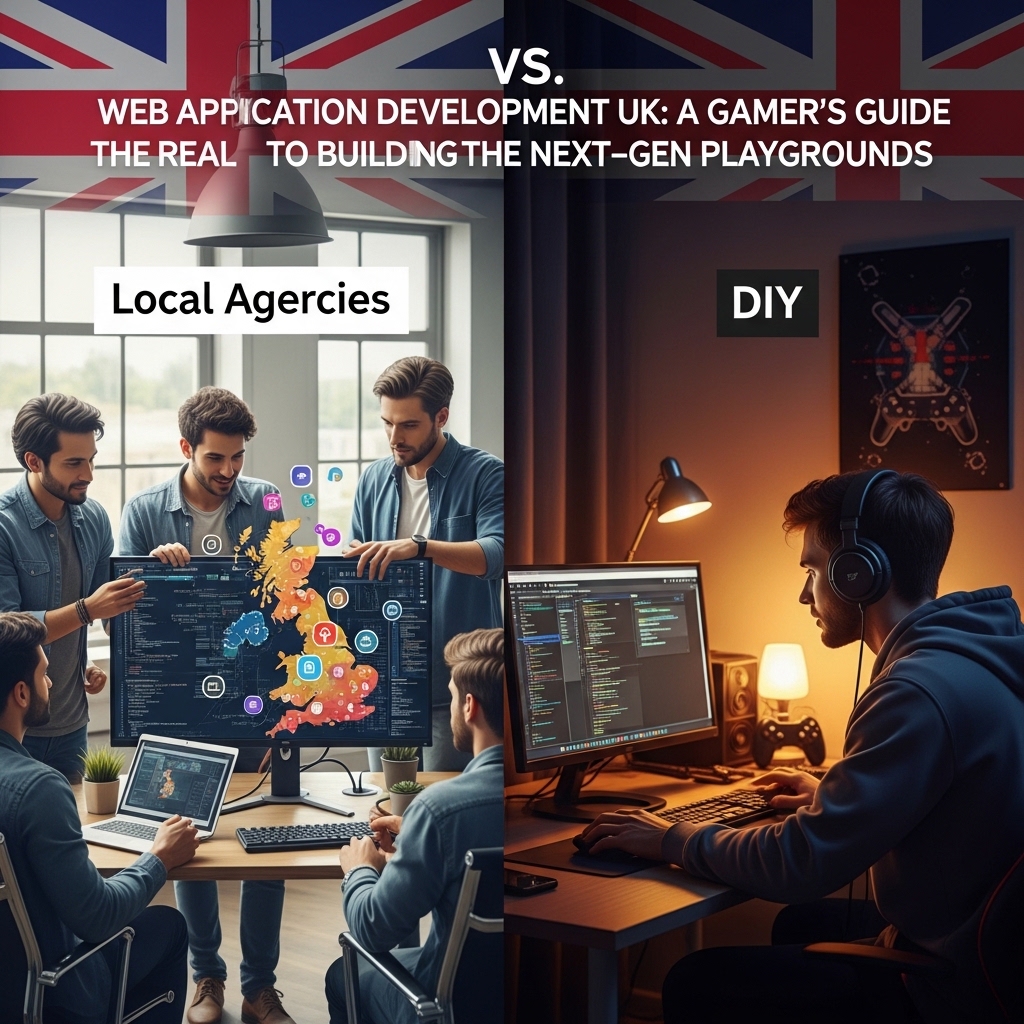
- Local Agencies vs. DIY: The Real Deal for web application development uk
- Tips & Common Mistakes When Launching a Gaming‑Centric Web App
- Verdict: Is the UK the Best Playground for Your Next Web Project?
- Frequently Asked Questions
Why web application development uk Matters to Gamers
In my experience, the moment a game’s community manager rolls out a responsive tournament hub, the whole server lights up with activity. The difference between a clunky PHP page and a React‑powered dashboard is as stark as playing on a 60 Hz monitor versus a 144 Hz panel. My opinion is that the UK’s focus on performance‑first design mirrors the way we gamers obsess over frame rates. Compared to many overseas markets, British firms tend to prioritize accessibility and GDPR‑compliant data handling, which means fewer “oops‑I‑forgot‑to‑ask‑for‑consent” headaches when you’re collecting player stats.
Practical tip: When scouting a UK partner, ask for a case study that shows load‑time benchmarks under 2 seconds for 10,000 concurrent users – that’s the sweet spot for a live‑streamed tournament lobby.
Choosing the Right Tech Stack in the British Isles
Frontend Frameworks That Feel Like a Pro‑Level Aim Assist
After playing a few demos of the latest Valorant UI, I realized the importance of fluid animations and instant feedback. In my experience, most UK agencies default to React or Vue because they offer component‑based architectures that let designers iterate fast, much like tweaking a weapon loadout. My opinion is that React’s massive ecosystem gives you a “mod‑shop” of libraries, while Vue feels more lightweight – similar to choosing a sniper rifle versus an SMG for a specific map.
Practical tip: Insist on a component library that follows the BEM naming convention; it keeps CSS as tidy as a well‑organized inventory and makes future updates painless.
Backend Choices: From Classic Rails to Serverless Functions
When I set up a Discord‑linked stats tracker last year, I started with Ruby on Rails because of its “convention over configuration” philosophy – it felt like a tutorial level that guides you through the basics. In my experience, however, many UK startups are now gravitating toward Node.js with Express or even serverless stacks on AWS Lambda to handle sudden spikes during esports finals.

My opinion is that a serverless approach can be as rewarding as unlocking a rare achievement: you only pay for what you use, but you must design your functions carefully to avoid cold‑start latency. Compared to a monolithic Java backend, serverless is like playing a fast‑paced battle‑royale instead of a turn‑based strategy game – you win big if you master the timing.
Practical tip: Set up API rate limiting from day one; it protects your endpoints from DDoS attacks that can happen when a popular streamer promotes your app live.
Local Agencies vs. DIY: The Real Deal for web application development uk
After playing a few indie titles that were built by solo devs, I know the thrill of pulling an all‑nighter to ship a patch. Yet, when I tried to build a full‑scale tournament platform on my own, I hit the wall of “feature creep” faster than a speedrun glitch. My opinion is that hiring a local agency can turn that wall into a ramp, especially when the agency already speaks the same slang you use on voice chat.
In my experience, agencies based in London’s Shoreditch district bring a “studio‑level polish” akin to a AAA launch, while Manchester’s tech scene offers more budget‑friendly options without sacrificing quality. Compared to DIY, a professional team can integrate OAuth2 with Twitch and Discord in a fraction of the time – think of it as swapping a basic keyboard for a mechanical one with macro support.
One practical tip: When you sign a contract, request a “sprint demo” every two weeks. It’s like a weekly match recap; you see what’s working, what needs rebalancing, and you can pivot before the next milestone.
For a deeper look at how agencies handle cross‑border projects, check out this related article on web application development USA.
Tips & Common Mistakes When Launching a Gaming‑Centric Web App
In my experience, the most common rookie mistake is ignoring the “player‑first” mindset. I once rolled out a leaderboard that displayed raw scores without any context – the community reacted like they’d been hit with a lag spike. My opinion is that you should always frame data in a way that tells a story, just like a good narrative mission in an RPG.
Another frequent slip is underestimating browser compatibility. Compared to a PC‑only game, a web app must run on Chrome, Edge, Safari, and even mobile browsers. Skipping thorough cross‑browser testing is like ignoring a weapon’s recoil pattern; it will bite you when you need it most.
Practical tip: Use automated testing tools like Cypress or Playwright to run a suite of UI tests on every pull request. It’s the equivalent of a daily practice match that catches bugs before they hit production.
Finally, don’t forget SEO for your gaming portal. Even though you’re targeting a niche audience, proper meta tags, Open Graph data, and fast load times can mean the difference between a hidden gem and a forgotten side‑quest.
Verdict: Is the UK the Best Playground for Your Next Web Project?
After playing with agencies across Europe, my conclusion is that web application development uk offers a unique blend of creative talent, robust infrastructure, and a cultural love for gaming that’s hard to match elsewhere. The UK’s strong emphasis on security (thanks to GDPR) and its thriving indie scene give you both safety and innovation – think of it as having a balanced team composition with a tank, healer, and DPS all in one.
My opinion is that if you’re aiming to launch a platform that serves esports tournaments, community forums, or in‑game marketplaces, the UK should be high on your radar. The only downside is the higher cost of living in cities like London, which can translate to pricier developer rates. However, the payoff in quality, speed, and future‑proofing often outweighs the extra pennies.

Practical tip: Start with a Minimum Viable Product (MVP) built on a proven stack (React + Node) and iterate based on player feedback. Treat each iteration like a patch cycle – small, frequent, and community‑driven.
Frequently Asked Questions
What are the most popular frontend frameworks among UK developers?
React leads the pack, followed closely by Vue.js and, to a lesser extent, Angular. The choice often depends on project size and the team’s familiarity, much like picking a character class based on playstyle.
How does GDPR affect web applications for gamers?
GDPR requires explicit consent for data collection, clear privacy policies, and the ability for users to request data deletion. Ignoring it can result in fines and loss of trust – comparable to a server ban for cheating.
Can I host my gaming web app on UK‑based cloud providers?
Yes. Major providers like AWS, Azure, and Google Cloud have data centers in London and Manchester, offering low latency and compliance with local regulations.
Is it cheaper to hire a freelancer or a full agency in the UK?
Freelancers can be more budget‑friendly for simple projects, but agencies bring a broader skill set, project management, and post‑launch support, which can save money in the long run.
Where can I find UK developers with esports experience?
Look for talent on platforms like LinkedIn, local meet‑ups such as London Games Festival, and university hackathons focused on gaming technology.
For a deeper dive into the technical side of web apps, see the Wikipedia article on Web Application.