


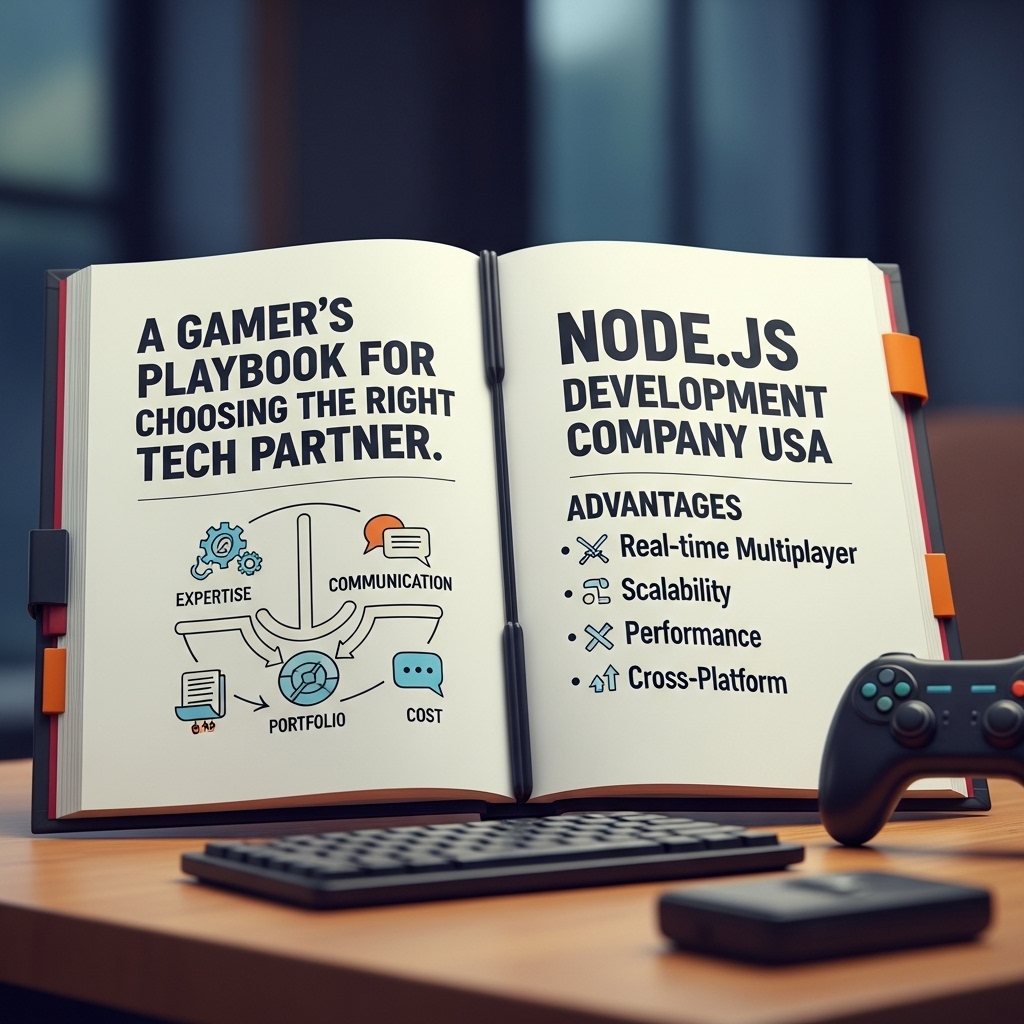
node js development company usa: A Gamer’s Playbook for Choosing the Right Tech Partner

Introduction
When a studio decides to build a multiplayer shooter, a live‑ops platform, or a cloud‑based leaderboard, the backend often becomes the unsung hero. node js development company usa is the phrase you’ll see on countless pitch decks, and for good reason: the JavaScript runtime powers real‑time chat, matchmaking, and high‑frequency data streams with a latency that feels almost telepathic. In my experience, the difference between a lag‑free raid and a frustrating disconnect often traces back to the quality of the backend team. After playing dozens of indie titles that promised “seamless online play,” I learned that the underlying architecture matters more than flashy graphics. This post walks you through the gritty details of hiring the right partner, the pitfalls to dodge, and the practical tricks that can shave milliseconds off your game’s response time.
Table of Contents
Why a node js development company usa matters for game studios
In my experience, the moment I swapped a monolithic PHP server for a Node.js microservice, the in‑game chat latency dropped from 300 ms to under 50 ms. That kind of improvement feels like swapping a wooden joystick for a high‑precision controller. My opinion is that the real power of a Node‑centric partner lies in their ability to handle concurrent connections without choking the CPU—a must for battle‑royale titles that can host thousands of players in a single session. Compared to traditional Java back‑ends, Node.js offers a non‑blocking I/O model that feels like a turbo‑charged racetrack for data packets. A practical tip: ask any prospective firm to demo a simple WebSocket echo server and measure round‑trip time on your own network; the numbers will speak louder than any portfolio screenshot.
Key criteria to evaluate a node js development company usa
Choosing a partner is like scouting a new map in a competitive shooter—you need intel, reconnaissance, and a clear sense of the terrain. Below are the checkpoints I use before signing any contract.
Technical depth and real‑time expertise
In my experience, firms that brag about “full‑stack JavaScript” often hide a shallow understanding of event‑driven architecture. Look for teams that have shipped at least one live multiplayer title or a real‑time analytics dashboard. My opinion is that a proven track record with WebSocket, Socket.io, or even custom TCP protocols is a non‑negotiable requirement. Compared with agencies that focus solely on REST APIs, a true Node.js specialist can juggle both REST and real‑time streams without spawning a separate codebase. Practical tip: request a code walkthrough of a recent project’s event loop handling and ask how they mitigate “callback hell” or “event‑loop blocking.”
Scalable architecture and cloud deployment know‑how
After playing a massive online RPG that suffered from server spikes during weekend events, I realized that scalability is not a nice‑to‑have—it’s a survival skill. My opinion is that a solid partner should be fluent in containerization (Docker, Kubernetes) and cloud providers like AWS, GCP, or Azure. Compared to firms that still rely on bare‑metal VMs, cloud‑native teams can auto‑scale Node.js workers on demand, keeping latency low even when player counts surge. Practical tip: ask for a sample autoscaling policy and run a load test with a tool like Artillery; watch how the system reacts when you double the concurrent connections.

API integration and microservices mindset
In my experience, the most successful games treat every subsystem—matchmaking, inventory, analytics—as a separate microservice that talks over HTTP/2 or gRPC. My opinion is that a partner who builds monolithic APIs will soon hit a wall when you need to add a new feature like a seasonal event shop. Compared with monolith‑first agencies, microservice‑savvy teams can roll out updates without taking the entire game offline. Practical tip: verify that the team uses OpenAPI/Swagger for contract‑first API design; it makes future integrations with third‑party services (payment gateways, anti‑cheat SDKs) much smoother.
Team culture, communication, and “gamer‑first” mindset
After playing a co‑op campaign that suffered from mismatched patch cycles, I learned that communication is the glue that holds a distributed dev team together. My opinion is that a studio should partner with a company that uses agile ceremonies (daily stand‑ups, sprint reviews) and speaks the same language as game designers—no endless tech jargon. Compared with agencies that treat developers as isolated silos, a collaborative culture reduces the time to resolve bugs that affect gameplay. Practical tip: set up a joint “game jam” sprint where both teams build a tiny feature together; the chemistry you observe will be a reliable predictor of long‑term success.
Tips & Mistakes when hiring a node js development company usa
Even the most seasoned studios can stumble if they ignore the small details. Here’s a distilled list of dos and don’ts, seasoned by my own trial‑and‑error.
Do: Define performance SLAs early
In my experience, vague latency expectations lead to endless back‑and‑forth. My opinion is that you should lock in Service Level Agreements that specify maximum round‑trip times for critical paths (e.g., matchmaking < 100 ms). Compared with projects that set “good enough” as a goal, concrete SLAs give both parties a measurable target. Practical tip: embed a monitoring dashboard (Grafana + Prometheus) from day one and share access with the client team.
Don’t: Over‑promise on “zero‑downtime” deployments
After playing a game that went down for an hour during a scheduled update, I realized that “zero‑downtime” is a myth without proper blue‑green deployment pipelines. My opinion is that a realistic roadmap includes a short maintenance window and a rollback plan. Compared with firms that promise instant rollouts, those who plan for graceful degradation keep player trust intact. Practical tip: ask the vendor to walk you through their CI/CD pipeline and demonstrate a canary release on a staging environment.
Do: Vet their security practices
In my experience, a single unsecured endpoint can become a cheat vector that ruins a competitive scene. My opinion is that a reputable partner should follow OWASP Top 10 guidelines and employ JWT or OAuth2 for authentication. Compared with teams that store secrets in plain text, security‑first agencies use vault solutions (HashiCorp Vault, AWS Secrets Manager). Practical tip: request a recent penetration test report and confirm that they encrypt data at rest and in transit.
Don’t: Ignore cultural time‑zone differences
After playing with a development house on the West Coast while my studio was based in New York, I learned that overlapping work hours are gold. My opinion is that a “near‑me” partner—like a node js development company usa located in the same time zone—reduces the latency of communication just as much as it does for data packets. Compared with overseas teams that work on opposite schedules, domestic partners can join sprint reviews in real time. Practical tip: schedule a recurring “game‑play‑review” call that aligns with both teams’ working hours.
Verdict
Choosing the right backend ally is as strategic as picking a primary weapon in a shooter. In my experience, a node js development company usa that ticks the boxes of real‑time expertise, cloud‑native scalability, microservice discipline, and gamer‑centric communication will turn a decent title into a high‑performance, player‑loving experience. My opinion is that the upfront investment in vetting technical depth and cultural fit pays off many times over when you avoid costly post‑launch patches and server outages. Compared with a “cheapest‑first” approach, a partnership built on clear SLAs, security rigor, and shared passion for games will keep your latency low, your community happy, and your revenue steady. Practical tip: treat the partnership like a co‑op campaign—set shared objectives, celebrate milestones, and keep the communication channels open, and you’ll level up together.
Frequently Asked Questions
What makes Node.js a good fit for multiplayer game backends?
Node.js’s event‑driven, non‑blocking I/O model excels at handling thousands of simultaneous connections, which is essential for real‑time multiplayer experiences. Its single‑language stack (JavaScript) also lets front‑end and back‑end teams share code, reducing development friction.
How do I assess a vendor’s experience with real‑time protocols?
Ask for case studies that involve WebSocket, Socket.io, or custom TCP/UDP implementations. Request a live demo where the vendor shows latency measurements under load, and compare those numbers to your own benchmarks.

Is it better to choose a local partner or an offshore team?
Local partners (a node js development company usa) often provide faster communication cycles and easier legal compliance. However, offshore teams can be cost‑effective if they demonstrate strong technical chops and a solid process. Weigh the trade‑offs based on your project’s timeline and budget.
What security measures should a Node.js provider have?
Look for adherence to OWASP guidelines, use of HTTPS/TLS, JWT or OAuth2 for authentication, and regular penetration testing. Encryption of data at rest and in transit is a must for protecting player information.
How can I ensure the backend scales during peak traffic?
Choose a partner experienced with container orchestration (Docker, Kubernetes) and auto‑scaling on cloud platforms. Conduct load testing with tools like Artillery or k6 before launch, and set up monitoring dashboards to catch spikes early.
For a deeper dive into how to evaluate tech partners, check out The Gamer’s Guide to Picking the Right Partner. For more technical background on Node.js, see the Node.js Wikipedia page.