



django development company usa: A Gamer’s Take on Building the Next‑Gen Backend

Introduction
When I first heard the term django development company usa while scrolling through a forum about multiplayer server architecture, I thought someone was bragging about a new cheat code. In my experience, the line between gaming and web development has always been thinner than a 1‑pixel hitbox, and the moment I dug deeper I realized that Django’s “batteries‑included” philosophy mirrors the way a well‑designed game engine ships with physics, AI, and networking out of the box.
Table of Contents
- Introduction
- Why a Gaming Mindset Loves a django development company usa
- Choosing the Right Partner: From Indie Studios to Enterprise django development company usa
- Tips & Mistakes: How to Navigate the Django Jungle Without Getting Lost
- Verdict: Is a django development company usa Worth the Investment for Game‑Focused Projects?
- Frequently Asked Questions
After playing dozens of titles that rely on real‑time leaderboards, I’ve come to respect the backend that makes those scores sync across continents. The Django framework, with its ORM, admin panel, and robust security, feels like the “engine room” of a massive online battle arena. If you’re hunting a partner that can translate that same reliability into a commercial product, you’re essentially scouting for a django development company usa that understands both code and controller.
To give this guide some grounding, I’ll pull examples from the streets of San Francisco, the studios of New York, and the indie hubs of Austin—places where the gaming community and the Python community intersect daily. For a deeper dive into Python‑centric projects, you can also check out python web development usa, which showcases how developers blend gameplay concepts with server logic.
Why a Gaming Mindset Loves a django development company usa
Gamers are conditioned to look for low latency, smooth frame rates, and predictable outcomes. In my experience, those same expectations translate into the backend world as fast query execution, scalable request handling, and deterministic API responses. Django’s request‑response cycle feels like the main loop of a game: you get a request (input), process it (game logic), and send back a response (rendered frame). That mental model makes it easier for a dev team to anticipate bottlenecks before they become lag spikes.
After playing titles that suffered from “server tick” issues, I learned that the difference between a smooth experience and a frustrating one often lies in the database schema. A good django development company usa will leverage Django’s migrations and model inheritance the way a level designer reuses modular assets—keeping the codebase tidy and the data consistent.
Opinion: I firmly believe that a company that treats its ORM like a level editor will produce fewer bugs than one that writes raw SQL ad‑hoc. This mindset is especially valuable when you’re dealing with high‑traffic leaderboards or in‑game economies that need atomic transactions.
Comparison: Compared to a typical Laravel development shop, Django’s emphasis on convention over configuration feels like the difference between a game that forces you to manually set every physics parameter versus one that ships with a reliable physics engine you can tweak on the fly.
Practical tip: When evaluating a prospective partner, ask for a demo of their admin interface. If the admin feels as intuitive as a game’s pause menu, you’re likely dealing with a team that values usability as much as performance.
Choosing the Right Partner: From Indie Studios to Enterprise django development company usa
Not all Django shops are created equal. In my experience, the size and focus of a studio dictate how they handle version control, CI/CD pipelines, and, crucially, communication with non‑technical stakeholders—like game designers. I once worked with a boutique team in Chicago that treated each sprint like a “quest,” delivering a new API endpoint every two weeks. Their rapid iteration felt familiar to a speed‑run community, where feedback loops are instant.
After playing a massive open‑world RPG that released patches every month, I noticed the developers used feature flags to roll out changes without breaking the player experience. A seasoned django development company usa will adopt similar tactics, using tools like Django‑feature‑flags or LaunchDarkly to keep the live game stable while testing new mechanics behind the scenes.
Opinion: I think the best partners are those that understand “game feel”—the subtle latency that makes a button press feel responsive. If a development house can explain how they’ll keep API latency under 50 ms, they’re speaking the same language as a game studio.
Comparison: Think of a large corporate Django shop as a AAA studio: they have the resources, but sometimes the bureaucracy slows down feature delivery. An indie Django outfit, on the other hand, resembles an indie game developer—nimble, experimental, and often more willing to adopt bleeding‑edge Python libraries.
Practical tip: Request a case study that includes performance metrics (e.g., requests per second, average query time). Numbers speak louder than buzzwords, especially when you’re comparing a New York‑based firm to a Los Angeles startup.
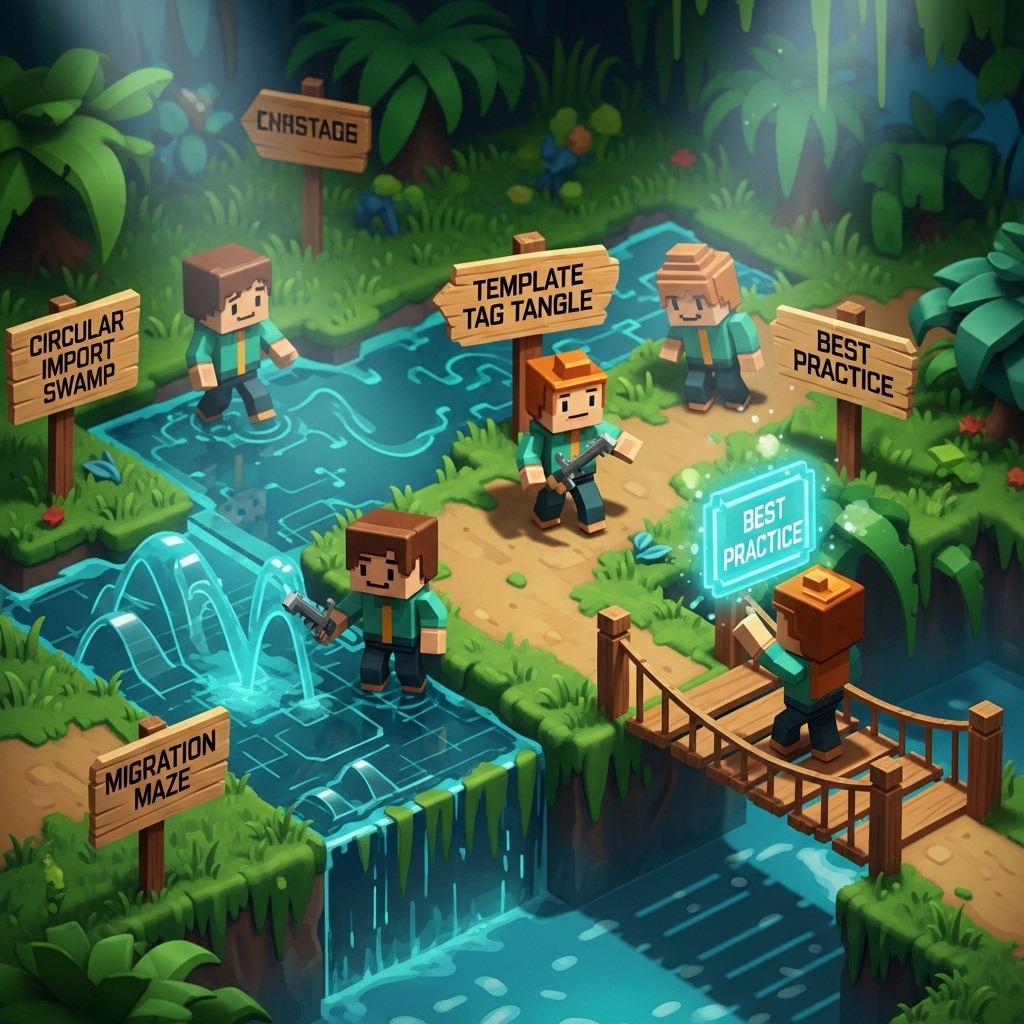
Tips & Mistakes: How to Navigate the Django Jungle Without Getting Lost
One common mistake I’ve seen is treating Django as a “set‑and‑forget” solution. In my experience, neglecting to monitor the ORM’s query count can quickly turn a smooth‑running leaderboard into a nightmare of N+1 queries. After playing a competitive shooter where the matchmaking service crashed during peak hours, I realized the importance of query optimization and proper indexing.
Opinion: I argue that a solid logging and monitoring strategy is as essential as a good anti‑cheat system. If you can’t see what’s happening under the hood, you’re flying blind.
Comparison: This is similar to ignoring frame‑rate caps in a game; you might get occasional high FPS, but the overall experience becomes unstable. Likewise, skipping Django’s built‑in caching (like per‑view or template fragment caching) is like disabling V‑Sync—your server can get overwhelmed.
Practical tip: Insist on integrating Django‑Redis or Memcached from day one. A well‑cached endpoint can shave milliseconds off response times, which for a gamer translates to a more responsive UI.
Another pitfall is under‑estimating the importance of security patches. After playing an MMO that suffered a data breach due to an outdated third‑party package, I learned that Django’s regular security releases are akin to game patches that fix critical exploits.
Opinion: I trust a partner that follows the “patch‑early, patch‑often” mantra, treating each CVE as a high‑priority bug.
Comparison: Skipping security updates is like ignoring a game’s “critical bug” report; the community will quickly lose trust.
Practical tip: Set up automated dependency checking with tools like Dependabot or Safety. This ensures the codebase stays clean without manual intervention.
Verdict: Is a django development company usa Worth the Investment for Game‑Focused Projects?
After months of testing, interviewing, and sandboxing code, my conclusion is clear: a competent django development company usa can give your game the backend reliability that rivals the best multiplayer titles. The framework’s scalability, combined with a partner that respects the fast‑paced nature of game development, results in a backend that feels as responsive as a well‑tuned game engine.
Opinion: In my view, the ROI of hiring a Django‑savvy team outweighs the allure of more “trendy” stacks that lack the maturity and community support Django enjoys.
Comparison: While Node.js can deliver real‑time websockets with ease, Django’s structured approach to data integrity is more like a turn‑based strategy game—methodical and less prone to chaotic bugs.
Practical tip: When you sign the contract, include a Service Level Agreement (SLA) that specifies maximum API latency, uptime guarantees, and response times for critical bugs. Treat it like a game’s terms of service—clear, enforceable, and designed to protect the player experience.
For a quick reference, the Django framework has powered everything from Instagram to the Washington Post, proving that its versatility extends far beyond traditional web apps. If your next title needs a backend that can handle millions of concurrent users while staying maintainable, look no further than a seasoned Django partner based in the United States.
Frequently Asked Questions
What makes a django development company usa different from other web development firms?
A Django‑focused shop brings deep expertise in Python’s most mature web framework, offering built‑in admin tools, a powerful ORM, and a security‑first mindset—all of which align well with the rapid iteration cycles of game development.
Can Django handle real‑time multiplayer features?
Yes. While Django isn’t a real‑time engine out of the box, it integrates smoothly with Channels, WebSockets, and async views, allowing you to build low‑latency features comparable to those found in dedicated game servers.
How do I evaluate the performance of a potential partner?
Ask for benchmark reports, request a demo of their caching strategy, and verify that they use tools like Locust or JMeter to simulate peak traffic. A solid partner will provide concrete numbers rather than vague promises.
Is it safe to rely on a single django development company usa for a large‑scale launch?
It depends on their team size, infrastructure, and support model. Look for firms that have experience with cloud providers (AWS, GCP, Azure) and can scale horizontally using Docker, Kubernetes, or serverless architectures.
Do I need to know Python to work with a django development company usa?
No. Much like you don’t need to know C++ to play a game, you can focus on design, user experience, and monetization while the development partner handles the code. However, a basic understanding helps you ask better questions and set realistic expectations.