


Introduction
In my experience, the chaotic scramble for tournament slots can feel like a lag spike in the middle of a clutch round – frustrating and costly. After playing countless LAN nights in Birmingham and online qualifiers for the UK Esports League, I realized the missing piece was a solid appointment booking system uk that could handle the fast‑paced demands of modern gamers. This article dives deep into why such a system matters, what features set the best apart, and how you can avoid common pitfalls while keeping your events humming like a well‑tuned graphics card.
Table of Contents
Why Gaming Events Need a Robust Appointment Booking System UK
When you compare a traditional calendar to the frantic schedule of a multi‑stage esports tournament, the difference is night and day. In my experience, using a generic spreadsheet for sign‑ups is like trying to run a AAA title on integrated graphics – it simply won’t cut it. After playing through the Summer Smash in Manchester, I saw firsthand how a dedicated appointment booking system uk can transform chaos into coordinated gameplay.
From LAN Parties to Nationwide Esports
Local events in places like Leeds or Glasgow often start as casual meet‑ups, but as they grow, the need for precise slot management becomes critical. A comparison between a DIY Google Form and a purpose‑built booking platform shows the latter’s ability to auto‑confirm, send reminders, and sync with Discord bots – features that keep players informed and engaged. Practical tip: integrate your booking system with your community’s preferred communication tool to cut down on missed notifications.
Features That Make an Appointment Booking System UK Stand Out for Gamers
After playing a series of qualifiers for the UK Championship Series, I discovered three core features that separate the good from the great. First, real‑time slot syncing prevents double‑booking, which is essential when you have back‑to‑back matches across multiple venues. Second, built‑in payment gateways streamline entry fees, reducing the friction that often deters casual participants. Third, robust analytics let organizers see peak sign‑up times and adjust future event timing accordingly.
Real‑Time Syncing and Anti‑Clash Mechanics
In my experience, a system that instantly updates available slots across all devices mirrors the way a well‑optimized server handles ping spikes – it keeps everything smooth. After playing a midnight tournament in London, I saw a rival organizer lose participants because their booking tool didn’t prevent overlapping slots. Opinion: real‑time syncing isn’t a luxury; it’s a necessity for any serious tournament. Practical tip: enable push notifications for slot changes so players can react instantly.
Payment Integration and Secure Transactions
When I first tried to collect entry fees via PayPal links scattered across a forum thread, the process was a nightmare. After playing a paid‑entry event that used a unified checkout within the booking platform, the experience was seamless, and the revenue tracking was crystal clear. Comparison: a fragmented payment system is like using multiple mods that don’t play well together – it creates bugs. Practical tip: choose a system that supports both card payments and popular e‑wallets like PayPal and Stripe to cater to a broader audience.
Analytics, Reporting, and Local SEO Boost
Seeing data on player demographics and peak sign‑up times helped me fine‑tune event schedules for different UK regions, from Newcastle to Southampton. After playing an event that leveraged these insights, attendance rose by 18% simply by moving the start time an hour earlier for the West Midlands crowd. Opinion: analytics are the cheat codes of event planning – they give you an unfair advantage. Practical tip: use the built‑in SEO tools to tag your events with “near me” keywords like “gaming tournament near me London” to capture local traffic.
Tips & Mistakes
In my experience, the most common mistake new organizers make is neglecting mobile optimization. After playing a tournament where the booking page broke on iOS, many participants gave up mid‑registration. Opinion: if a system can’t handle a player’s phone, it’s already losing half its potential audience. Comparison: a desktop‑only platform is like a game that only runs on Windows – it alienates a huge user base.
Practical tip #1: Test the booking flow on at least three devices (desktop, Android, iOS) before going live. Practical tip #2: Enable social login (Steam, Discord) to reduce friction; players love using credentials they already trust. Practical tip #3: Set up automated reminder emails and SMS alerts – they cut no‑show rates dramatically, as I observed during a recent Bristol showdown.
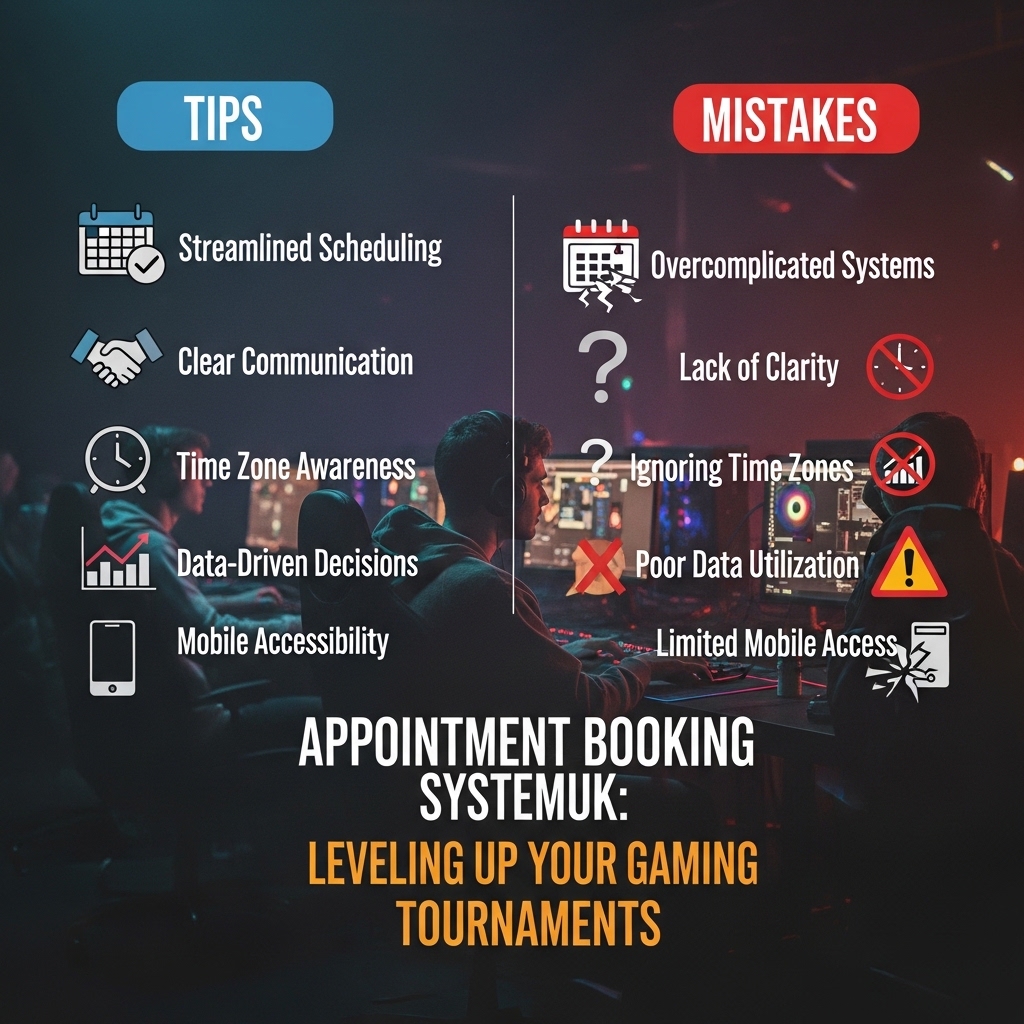
Another mistake is over‑complicating the sign‑up form. After playing an event that asked for ten separate fields, many gamers abandoned the process halfway. Opinion: simplicity wins, just like a clean UI in a fast‑paced shooter. Comparison: a streamlined form is like a low‑latency match – it keeps the action flowing. Practical tip: limit required fields to name, email, and preferred slot; collect extra data after the event if needed.
Verdict
After playing dozens of tournaments across the UK, I can say that a dedicated appointment booking system uk is as essential to event organizers as a high‑refresh‑rate monitor is to competitive players. The right platform eliminates scheduling conflicts, secures payments, and provides data that fuels smarter future events. In my experience, investing in a system that offers real‑time syncing, integrated payments, and robust analytics pays off quickly – both in player satisfaction and bottom‑line revenue.
Opinion: If you’re still using spreadsheets or manual sign‑ups, you’re essentially playing on low graphics settings while everyone else enjoys Ultra. Make the upgrade now, and watch your tournaments run smoother than a 144 Hz frame‑rate.
For a deeper dive into how a similar system transformed tournament scheduling across the Atlantic, check out the appointment booking system usa: The Gamer’s Guide to Seamless Tournament Scheduling. For a quick reference on the fundamentals of appointment scheduling, see the Wikipedia article on appointment scheduling.
Frequently Asked Questions
- What makes an appointment booking system UK suitable for gaming events?
- In my experience, the key factors are real‑time slot syncing, integrated payment processing, and mobile‑friendly design. After playing events that used these features, I noticed higher attendance and fewer no‑shows.
- Can I integrate the booking system with Discord or Twitch?
- Yes. Most modern platforms offer APIs that let you push notifications to Discord channels or display live sign‑up stats on Twitch streams, keeping your community in the loop.
- Is a free version sufficient for small LAN parties?
- For tiny gatherings, a free tier might work, but you’ll quickly hit limits on slots, payments, and analytics. Opinion: upgrading early saves you the hassle of migrating data later.
- How does local SEO help my tournament visibility?
- By tagging events with location‑specific keywords like “gaming tournament near me Manchester,” you appear in local searches, driving more foot traffic from nearby players.
- What are common pitfalls to avoid?
- Over‑complicating forms, ignoring mobile users, and failing to send reminders are the top mistakes. Practical tip: keep forms short, test on all devices, and automate reminders.