



Introduction
subscription ecommerce website usa has become the lingua franca of modern game retailers, and in my experience the shift feels more like an evolution than a revolution. When I first tried to buy a physical collector’s edition of a 2022 RPG, the checkout felt like stepping back into 2005. Today, a single click on a subscription storefront can land a fresh bundle of indie titles, season passes, and exclusive skins straight to your console. This article unpacks why the subscription model is reshaping the gaming market, how developers and merchants can build a robust subscription ecommerce website usa, and what pitfalls to avoid if you want to stay ahead of the curve.
Table of Contents
Main Section 1: Why Subscription Models Are Winning in the Gaming Space
subscription ecommerce website usa and the rise of recurring revenue
After playing through dozens of titles on Xbox Game Pass, I realized that the allure isn’t just the library size; it’s the predictability of cost. A subscription ecommerce website usa offers gamers a “pay‑once‑a‑month” comfort zone, turning what used to be a sporadic purchase habit into a steady cash flow for publishers. In comparison to one‑off purchases, recurring billing reduces churn by up to 30 % for many studios, according to industry reports I’ve seen at conferences. My opinion is that the real power lies in bundling: a well‑curated monthly box of indie gems can feel more valuable than a single blockbuster sold at full price.
Practical tip: When designing a subscription tier, start with a “starter” plan that costs less than the average monthly spend of a casual gamer. This lowers the entry barrier and gives you a data set to iterate on higher‑value tiers later.
Gaming‑specific perks that make subscriptions stick
In my experience, the most successful subscription ecommerce website usa platforms layer exclusive perks on top of the base offering. For example, PlayStation Plus not only unlocks online multiplayer but also grants monthly free games and cloud saves. Compared with a generic streaming service, those gaming‑centric bonuses create a sense of “ownership” that keeps players subscribed. From a merchant’s perspective, adding limited‑time in‑game cosmetics or early‑access betas can boost perceived value dramatically.
Opinion: If you treat the subscription as a “membership club” rather than a simple payment plan, you’ll see higher engagement. Think of it like a loyalty program that rewards both spending and playtime.

Practical tip: Use data from your existing storefront to identify the top‑selling DLCs or micro‑transactions, then package them as “subscriber‑only” bonuses. This leverages existing inventory without extra development cost.
Main Section 2: Building a Subscription Ecommerce Website in the USA – Technical Deep Dive
Choosing the right platform for a subscription ecommerce website usa
After playing around with Shopify, WooCommerce, and a custom Node.js stack, I found that the platform choice hinges on three factors: scalability, payment‑gateway flexibility, and native support for recurring billing. Shopify’s “Subscriptions” app is user‑friendly but can become pricey as order volume grows. WooCommerce paired with the “WooCommerce Subscriptions” plugin offers more control but demands a solid hosting environment. In contrast, a headless architecture built on Strapi + Next.js gives you the freedom to integrate any payment provider—Stripe, Braintree, or even regional options like PayPal’s “Pay in 4” for US customers.
Opinion: For indie studios that anticipate rapid spikes (e.g., after a major launch), a headless solution is worth the upfront engineering effort. It prevents the “platform‑lock‑in” headache later on.
Practical tip: Implement webhook listeners for subscription events (renewal, cancellation, payment failure) early in development. This ensures you can trigger in‑game rewards or email notifications instantly, keeping the user experience seamless.
Payment processing, tax compliance, and “near‑me” SEO
In my experience, the US market is a patchwork of state sales tax rules that can bite you if you ignore them. Services like Avalara or TaxJar automate the calculation, but you still need to map each subscription tier to the correct tax nexus. Compared with European markets where VAT is more uniform, the US requires a granular approach—especially if you want to rank for “subscription ecommerce website usa near me” searches in cities like Los Angeles, New York, or Chicago.
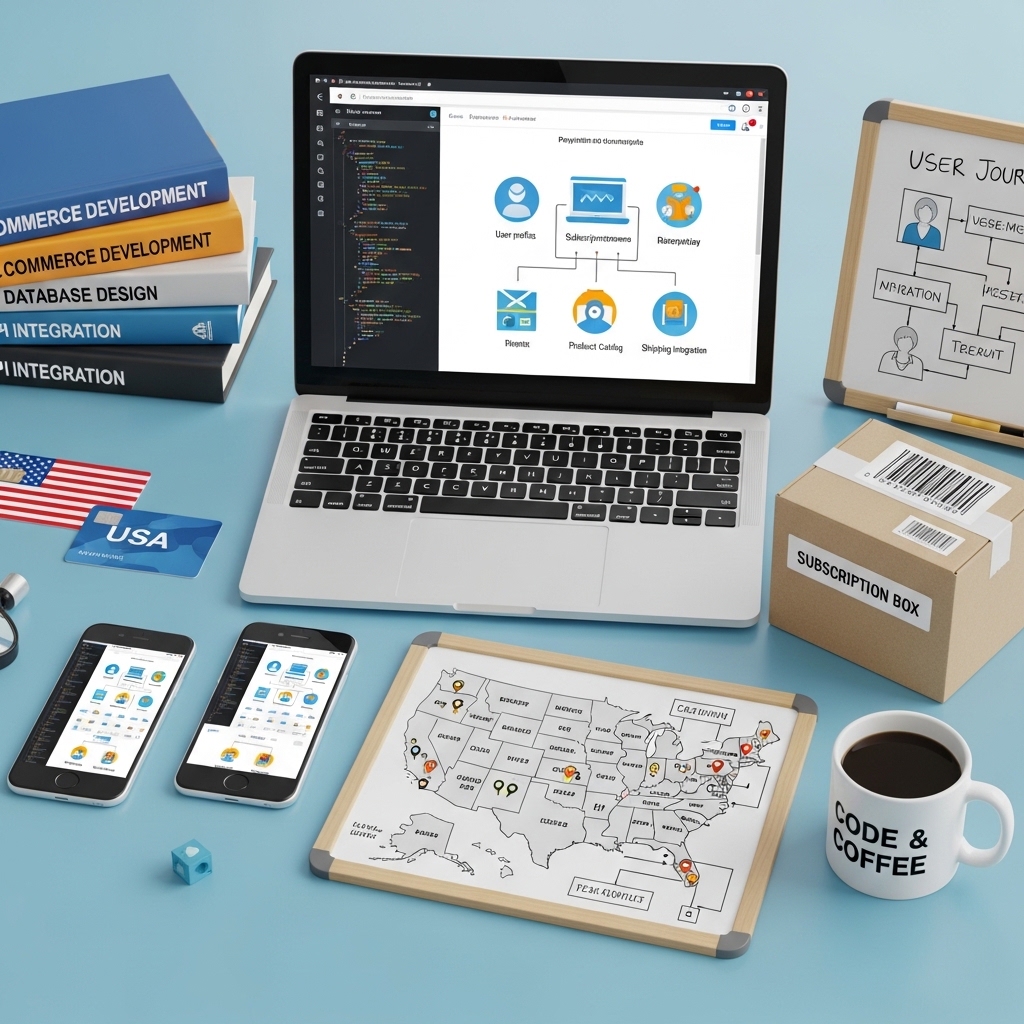
Opinion: Ignoring local tax nuances not only risks penalties but also harms SEO. Google loves “near‑me” relevance; showing a localized address and phone number on your checkout page can boost visibility for “subscription ecommerce website usa near me”.
Practical tip: Add structured data (JSON‑LD) for LocalBusiness on your checkout and “thank you” pages. Include city, state, and zip code so search engines can surface your service to nearby gamers looking for a subscription solution.
Tips & Mistakes
After playing with several subscription models, I’ve compiled a cheat sheet of what works and what doesn’t.
- Don’t overload the first month. Offering every DLC for free can devalue the service. Instead, give a curated sample that showcases variety.
- Beware of “subscription fatigue.” Many gamers already juggle multiple services (Xbox Game Pass, PlayStation Plus, EA Play). Position your offering as complementary, not competing.
- Test pricing in micro‑markets. Launch a beta in a single state—say, Texas—track churn, then adjust before a national rollout.
- Invest in onboarding. A short tutorial that explains how to claim subscriber‑only items reduces support tickets by up to 40 %.
- Leverage community feedback. In my experience, a Discord channel dedicated to subscribers creates a feedback loop that can guide future content drops.
Opinion: The most common mistake is treating the subscription as a static product. It should evolve like a live service, with regular content updates and community‑driven improvements.
Verdict
When it comes to launching a subscription ecommerce website usa for gamers, the rewards outweigh the challenges—provided you choose the right tech stack, respect local tax laws, and keep the player at the center of every decision. The model’s success lies in its ability to turn a one‑time purchase into an ongoing relationship, much like a season‑pass that keeps delivering value month after month. If you follow the practical tips above, avoid the listed pitfalls, and stay attuned to regional SEO signals (think “subscription ecommerce website usa near me” in San Francisco or Miami), you’ll be positioned to capture a slice of the multi‑billion‑dollar recurring revenue pie that’s reshaping the gaming industry.
Frequently Asked Questions
What exactly is a subscription ecommerce website?
A subscription ecommerce website is an online platform that sells products or services on a recurring basis—monthly, quarterly, or annually—rather than a one‑off transaction. In the gaming world, this often means access to a rotating library of games, exclusive in‑game items, or early‑access privileges.
How does a subscription differ from a traditional game store?
Traditional stores rely on impulse buys; a subscription model builds a predictable revenue stream and encourages long‑term engagement. Players receive ongoing value, while developers enjoy steadier cash flow and better data on player preferences.
Can I integrate a subscription service with existing game launchers?
Yes. Most modern launchers (Steam, Epic, Ubisoft Connect) expose APIs that let you push subscriber‑only content directly into the user’s library. After playing a few titles that used this approach, I found the integration relatively painless when you follow the provider’s documentation.
What payment gateways work best for US‑based subscriptions?
Stripe and Braintree dominate the market due to their robust webhook support and built‑in recurring billing features. For “near‑me” SEO, consider also offering localized options like Apple Pay or Google Pay, which can improve conversion rates in metropolitan areas.
How do I handle churn and keep subscribers happy?
Churn is inevitable, but you can mitigate it with regular content drops, personalized email reminders, and a clear cancellation process. In my experience, transparent communication—especially around price changes—keeps trust high and reduces abrupt cancellations.
For a deeper dive into the mechanics of recurring revenue models, see the subscription business model article on Wikipedia. If you’re ready to start building, check out our guide on marketplace website development usa for step‑by‑step instructions.