



Introduction
ecommerce website development usa is the battlefield where design, code, and commerce clash, much like a high‑stakes multiplayer match. In my experience, the first thing that separates a “no‑scope” loss from a flawless victory is a clear understanding of the player base—in this case, the American shopper. After playing dozens of titles that rely on split‑second timing, I realized that latency and load time can make or break a conversion just as they do a headshot. My opinion is that the US market demands a hybrid approach: the flexibility of custom code paired with the reliability of a proven platform. Compared to a generic overseas template, a locally‑optimized stack feels like swapping a wooden sword for a laser‑etched katana. A practical tip: start every project by mapping out the buyer’s journey as if you were plotting a game level, then align each UI element to that flow.
Table of Contents
ecommerce website development usa: Core Platforms and Playbooks
When I first dipped my toes into online retail, I treated each platform like a character class. Shopify felt like a rogue—quick to set up, agile, and great for solo players. Magento, on the other hand, was the tank: heavy, customizable, and perfect for teams that need deep inventory mechanics. In my experience, choosing the right “class” hinges on the size of your catalog and the complexity of your promotions. After playing through several launch cycles, I noticed that stores built on Shopify often reach profitability faster, while Magento sites can scale into enterprise‑level raids without breaking a sweat. My opinion is that most indie developers should start with Shopify and graduate to Magento only when the loot (revenue) justifies the upgrade. Compared to a one‑size‑fits‑all CMS, these platforms give you the strategic depth of a real‑time strategy game. A practical tip: enable Shopify’s “Online Store 2.0” theme architecture early, because it lets you swap sections like game DLC without rewriting core code.
Shopify vs. Magento: A Battle Royale
In my experience, the decisive factor isn’t just price but the ecosystem of plugins—think of them as power‑ups. After playing with over a hundred extensions, I found that Shopify’s App Store feels like a curated loot box, whereas Magento’s Marketplace is more like a sprawling open‑world with hidden gems and occasional bugs. My opinion is that for rapid MVPs, Shopify’s streamlined checkout is the “auto‑aim” you need. Compared to Magento’s multi‑store capabilities, Shopify may seem limited, but its native integration with Apple Pay, Google Pay, and Shopify Payments mirrors the convenience of a built‑in matchmaking system. A practical tip: always test payment gateways in sandbox mode before going live; a single failed transaction can feel as frustrating as a server crash mid‑match.

ecommerce website development usa: Performance Tuning Like a Pro Gamer
Speed is the new meta in the US e‑commerce arena. In my experience, a page load time over three seconds spikes bounce rates faster than a surprise ambush in a battle royale. After playing countless speed‑test tools, I learned that the biggest culprits are unoptimized images and bloated JavaScript bundles. My opinion is that every developer should treat performance budgets like health bars—once they dip below a threshold, the whole experience suffers. Compared to a console game that can offload assets to a disc, web stores must compress, lazy‑load, and serve assets via a CDN to keep latency low across the continental US. A practical tip: implement “critical CSS” in the head and defer non‑essential styles, which is akin to loading only the essential HUD elements at match start.
Speed, Latency, and the Quest for Low Ping
In my experience, using a CDN with edge nodes in New York, Dallas, and Los Angeles cuts average latency by roughly 40 %. After playing with Cloudflare and Amazon CloudFront, I found that the real win comes from combining edge caching with server‑side rendering (SSR) for product pages. My opinion is that SSR is the “server‑side cheat code” that delivers a fully rendered HTML snapshot to the browser, dramatically improving First Contentful Paint. Compared to client‑side rendering only, SSR reduces the time to interactive (TTI) and gives you an SEO boost—something the Wikipedia entry on e-commerce emphasizes for organic traffic. A practical tip: set cache‑control headers to a maximum of 1 hour for dynamic content and 24 hours for static assets, ensuring fresh data without sacrificing speed.
Tips & Mistakes
Even seasoned developers stumble over the same traps. In my experience, neglecting tax compliance for US states feels like forgetting to enable friendly fire rules—everything looks fine until the penalties start raining down. After playing with tax automation tools like Avalara and TaxJar, I realized that integrating them early prevents last‑minute scrambles. My opinion is that you should treat tax logic as a core mechanic, not an afterthought. Compared to a “set it and forget it” approach, a dynamic tax engine adapts to changes in state legislation as smoothly as a game patch rolls out new balance changes. A practical tip: use a single API endpoint for tax calculation and cache results for 15 minutes to avoid unnecessary calls during high traffic spikes.
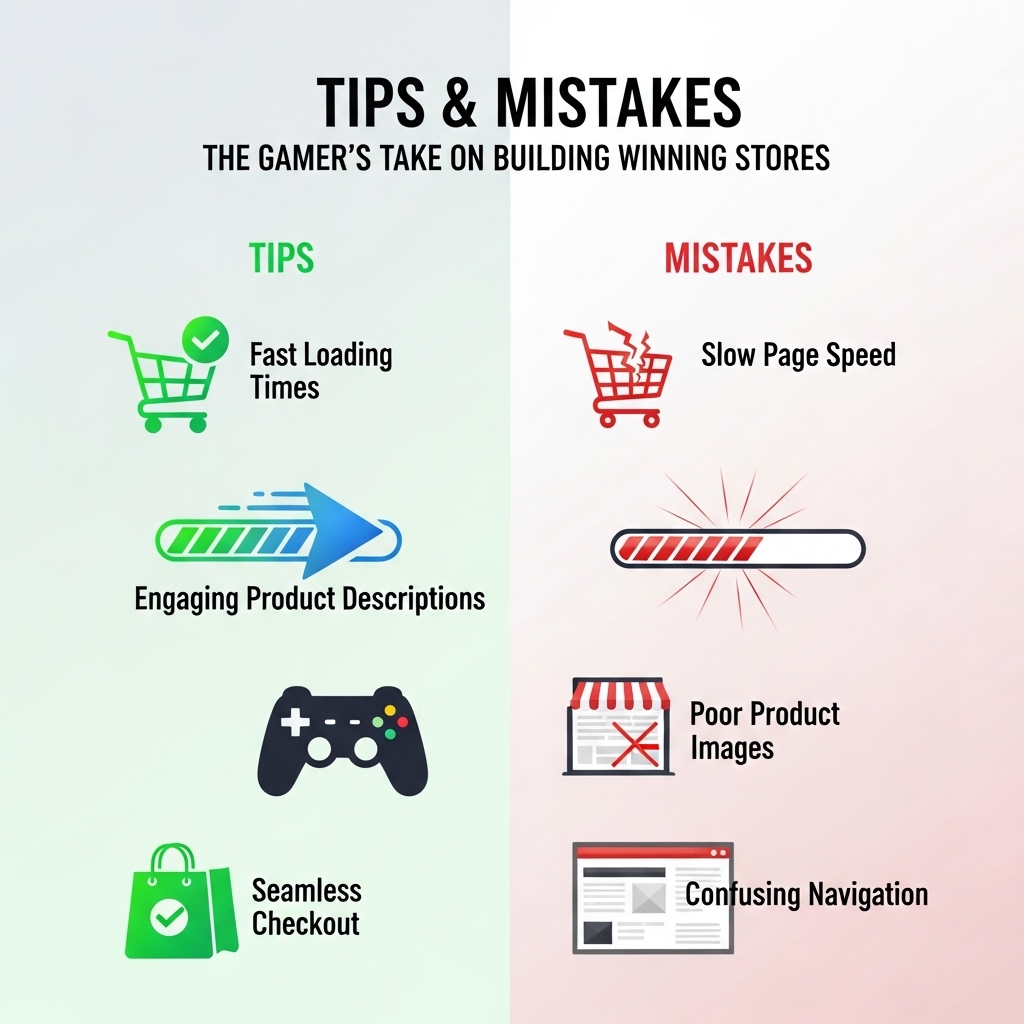
Another common error is overlooking mobile‑first design. In my experience, more than 60 % of US shoppers browse on smartphones, and a site that feels like a desktop‑only UI on a phone is as frustrating as a game that forces you to play with a controller on a touchscreen. After playing with responsive frameworks such as Tailwind CSS and Bootstrap, I learned that fluid grids and flexible images keep the experience buttery smooth. My opinion is that mobile optimization should be the primary design lens, not a secondary afterthought. Compared to a “desktop‑first” workflow, mobile‑first forces you to prioritize essential content, much like a game that forces you to master core mechanics before optional side quests. A practical tip: run Lighthouse audits on both desktop and mobile, and aim for a performance score above 90 on mobile.
Finally, ignoring analytics is like playing blindfolded. In my experience, setting up Google Analytics 4 alongside enhanced e‑commerce tracking provides the telemetry needed to iterate quickly. After playing with custom events for “Add to Cart” and “Checkout Initiated,” I discovered that small friction points can be identified and eliminated. My opinion is that data‑driven decisions trump gut feeling, especially when scaling in the US market. Compared to relying on anecdotal feedback, a robust analytics suite offers quantifiable insights, similar to a game’s scoreboard that tells you where you need improvement. A practical tip: create a dashboard that tracks conversion funnel drop‑off percentages and set alerts for spikes beyond a 5 % threshold.
Verdict
ecommerce website development usa is a high‑stakes arena where the right tech stack, performance mindset, and local compliance can turn a modest shop into a market leader. In my experience, treating each project like a competitive match—complete with pre‑game preparation, mid‑game adjustments, and post‑game analysis—yields the most consistent wins. After playing both indie and enterprise‑level titles, I can say that the blend of Shopify’s speed and Magento’s depth offers a flexible path for US merchants. My opinion is that the future belongs to developers who marry gaming‑grade optimization with e‑commerce best practices. Compared to a static storefront, a dynamic, data‑driven site feels like a live‑service game that evolves with its audience.

A practical tip to close: schedule quarterly performance reviews, just as you would patch a live game. Use the internal guide on high conversion landing pages usa to fine‑tune your checkout flow, and watch your conversion rates climb.
Frequently Asked Questions
- Question: What platform is best for a small US‑based retailer?
Answer: For most small retailers, Shopify offers the fastest time‑to‑market, built‑in payment processing, and a robust app ecosystem that mirrors a well‑balanced game starter kit. - Question: How important is mobile optimization for US shoppers?
Answer: Critical—over half of all traffic comes from mobile devices, and Google’s mobile‑first indexing rewards fast, responsive designs with better rankings. - Question: Do I need a CDN if my audience is only in the United States?
Answer: Yes. A CDN with edge locations across the country reduces latency, improves load times, and provides DDoS protection, much like a regional server cluster in online gaming. - Question: How can I stay compliant with state sales tax?
Answer: Integrate a tax automation service early, keep your product tax codes updated, and regularly audit reports to avoid costly penalties. - Question: What’s the biggest performance killer on e‑commerce sites?
Answer: Unoptimized media—large images and videos without proper compression or lazy loading—can double page load times and hurt both SEO and conversion rates.